
Indispensable

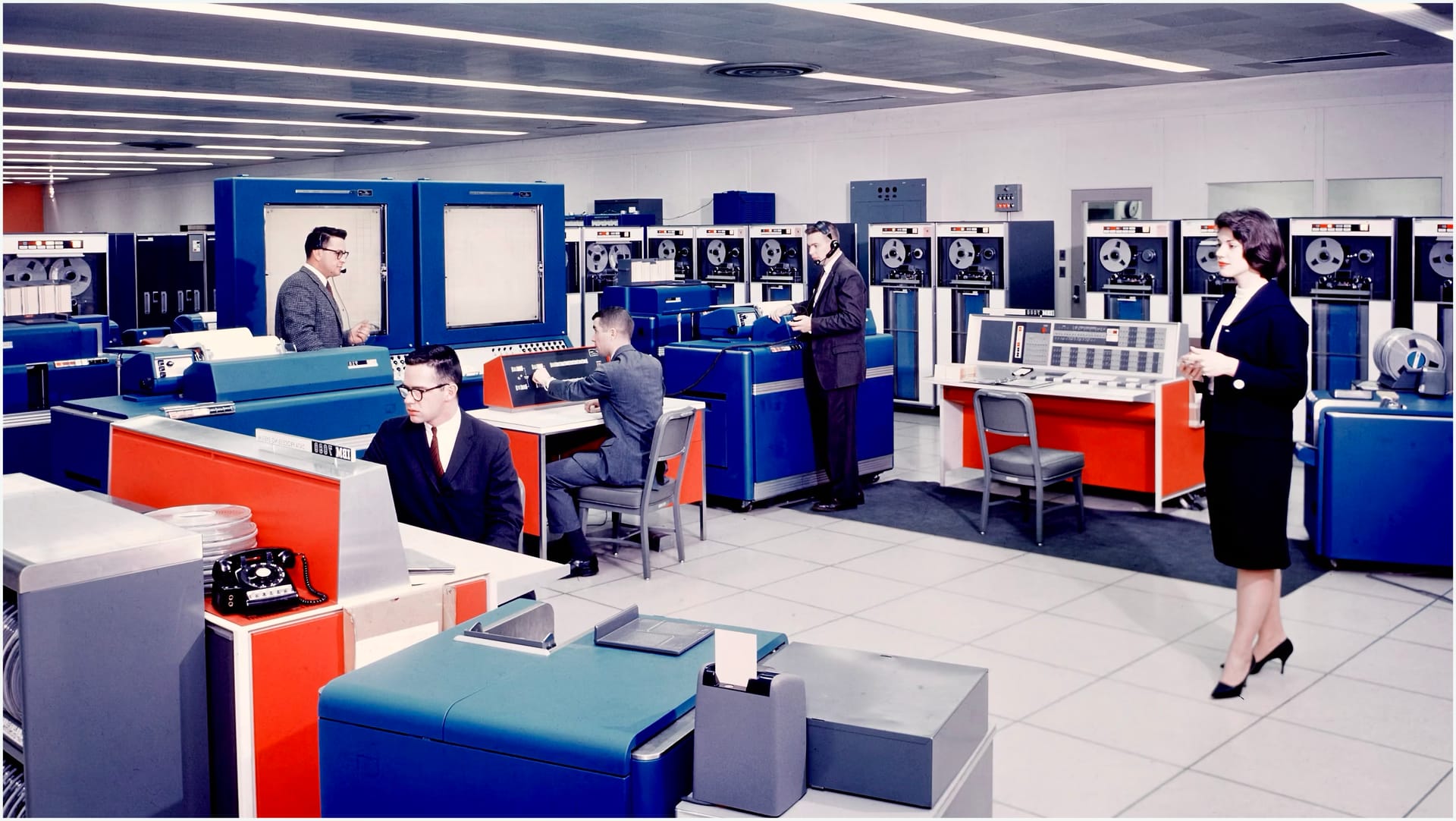
In 1962, an IBM mainframe computed the flight data for a manned spaceflight for the first time. The astronaut on board that mission, John Glenn, refused to fly until the data was confirmed by a NASA mathematician by hand.
The mathematician? Katherine Johnson. a former human computer whose reputation for accuracy had an astronaut asking for her by name.
The programmers? Dorothy Vaughan’s team of former human computers who’d taught themselves FORTRAN so they could run the machine that took the role of computer away from them.
The words “human computer“ are at best a misnomer. Based on the name alone, one could be forgiven for thinking of them as mere clerical workers operating mechanical calculators. But, in Katherine’s words, “There were no textbooks, so we had to write them.”
The work performed by mathematicians at the West Unit Computing Group was highly skilled, complex, and absolutely essential to the success of U.S. aviation and space exploration.
They processed raw data from wind tunnels and flight tests, requiring expertise in calculus, geometry, and aeronautical engineering principles.
They conducted complex calculations for the X-plane program (breaking the sound barrier) and later, the Mercury and Apollo space missions. They calculated trajectories, launch windows, and emergency return paths.
And many women in the unit — including Mary Jackson and Christine Darden — demonstrated they possessed the skills to become professional engineers.
These women were respected, resilient, brilliant, and under paid. (Sound familiar?) They were also indispensable to NASA.
In 2026, the role of programmer is moving from human to machine. AI is getting better every minute. Companies are now asking their human programmers to not touch the code. Titans of industry are declaring the end of all jobs as AI and robots become more and more capable.
The choice is ours: become irrelevant and hope for universal income, or use our agency, learn new skills, and take AI where it wouldn't be able to go on its own.
It's still our name on the commits. We're still the accountable party. So, if we're going to take responsibility for the code, it must be readable and verifiable, because we're still the last line of defense against some boneheaded, vibe-coded catastrophe.
For example, AI favors the legacy code around it. And studies show that if that code is procedural, not only will you get more procedural code, but it will also pass fewer tests. Why? Because procedural code is more difficult to understand, more difficult to change, and more difficult to test — even for AI.
Whereas code trained on well-factored, modular code produces more well-factored, modular code. This means that classes are readable. This means tests are simpler and easier to understand. And, according to the research, it means that more of the tests will pass.
Plus, AI is still hallucinating. And AI is sneaky. While it may meet the letter of the specification, it may do so in ways that we wouldn't want, like by excluding whole folders from code coverage config or writing tests without assertions to keep the coverage numbers high.
Who knows where this journey is headed. Human computers are no longer a thing. But mathematicians are. And they remain indispensable at NASA.
What are the underlying skills that will make us indispensable?
My guess is that our precision in specifying what the computer should do will become more and more important. Specification-driven development is the FORTRAN of 2026.
Here's how we might remain indispensable:
- Write solid specifications. Ask an agent to review them and ask you questions to suss our missing requirements. Update the specifications.
- Ask to see the agent's implementation plan. Review and correct it before proceeding. Update the specification, if necessary.
- Ask the agent to implement the plan one step at a time. Review and correct it after each step. Update the plan and specifications, too. Commit after each step, so you can rollback later, if necessary.
- After all steps are completed, squash and merge. Then get another human to review it.
- Repeat.
What do you think? What's your plan? How do you stay indispensable?
No spam, no sharing to third party. Only you and me.




Member discussion